You have done everything right. You built the business. You showed up consistently. You invested in the courses, the coaching, the branding. And yet there is this persistent, bone-deep exhaustion that no amount of strategy or scheduling can seem to fix. You feel reactive, wired, unable to slow down even when your body is begging you to rest. You oscillate between hustle and collapse, and somewhere along the way, joy quietly slipped out of the equation.
If this sounds familiar, you are not broken and you are not lazy. Your nervous system is trying to tell you something. And learning how to listen to it might be the single most transformative thing you do for both your health and your business.
This guide was written for women entrepreneurs who are ready to stop white-knuckling their way through success and start building something sustainable, from the inside out. We are going to go deep into what nervous system regulation actually means, why it matters profoundly for women in business, and exactly how to start building the somatic capacity to hold the life you are creating.
What Is the Nervous System?
Before we talk about regulation, it helps to understand what we are actually working with. Your nervous system is the body's master communication network. It controls everything from your heartbeat and digestion to how you respond to a difficult email at 10 PM. The branch we are most concerned with here is the autonomic nervous system (ANS), which operates largely outside your conscious control and governs your survival responses.
The ANS has two primary branches. The sympathetic nervous system is your accelerator. It activates the fight-or-flight response, flooding your body with cortisol and adrenaline when it perceives a threat. Your heart rate increases, your muscles tense, and your thinking narrows to focus on survival. The parasympathetic nervous system is your brake. Often called the "rest and digest" system, it helps your body recover, repair, and return to baseline after a stressful event.
When we talk about stress responses, most people are familiar with fight or flight. But there are actually four primary survival states your nervous system can default to:
- Fight — irritability, anger, controlling behavior, perfectionism, defensiveness
- Flight — anxiety, overthinking, workaholism, constant busyness, inability to sit still
- Freeze — numbness, dissociation, brain fog, feeling stuck, procrastination
- Fawn — people-pleasing, over-giving, difficulty saying no, abandoning your own needs to keep the peace
For high-achieving women, the flight and fawn responses are particularly common. You might recognize them as the voices that tell you to "just work harder" or "just be more accommodating." These are not character traits. They are nervous system adaptations, and they can be rewired.
What Is Nervous System Regulation?
Nervous system regulation is the ability to move fluidly between states of activation and rest. It does not mean being calm all the time. That is a misconception. A well-regulated nervous system can respond to stress appropriately — ramping up energy and focus when needed — and then return to a grounded, calm baseline when the stressor has passed. The key word is return. Regulation is about resilience: how quickly and effectively your system comes back to center.
A dysregulated nervous system, by contrast, gets stuck. It stays in fight, flight, freeze, or fawn long after the actual threat is gone. Your body continues producing stress hormones as though the danger is ongoing. Over time, this chronic activation rewires your baseline so that hypervigilance feels normal and rest feels unsafe. You might even notice that when things are going well in your business, you feel a creeping anxiety — as if something bad is about to happen. That is your nervous system struggling to hold a new, expanded state.
Regulation is not about controlling your body. It is about befriending it. It is the practice of creating enough safety inside yourself that your system can finally exhale.
This is where the concept of somatic capacity becomes essential. Somatic capacity is your body's ability to hold and process intensity — whether that is emotional energy, stress, big goals, or rapid growth — without shutting down, numbing out, or spiraling into survival mode. Think of it as your internal container. The larger your somatic capacity, the more you can receive, create, and sustain without your nervous system hitting the panic button.
Why Women Entrepreneurs Need Nervous System Regulation
Here is something that rarely gets talked about in business coaching: your nervous system is making most of your business decisions. When you are dysregulated, you make choices from a place of scarcity, fear, and reactivity. You undercharge because your fawn response wants to keep everyone happy. You overwork because your flight response equates rest with danger. You avoid launching that program because your freeze response tells you it is not safe to be seen.
Women entrepreneurs carry a unique biological and cultural load. Hormonal fluctuations throughout the menstrual cycle, perimenopause, and menopause directly affect nervous system sensitivity. Add to that the societal conditioning that teaches women to prioritize everyone else's needs, and you have a perfect recipe for chronic dysregulation. The entrepreneurial journey, with its inherent uncertainty, financial pressure, and constant visibility demands, compounds this further.
Research increasingly shows that our capacity for success is directly tied to our nervous system's capacity to hold that success. You cannot think your way into a bigger business if your body is terrified of expansion. This is why so many women hit an invisible ceiling in their revenue, their audience growth, or their creative output. It is not a strategy problem. It is a regulation problem. Your system will unconsciously sabotage anything that exceeds what it perceives as safe.
When you prioritize nervous system regulation, everything shifts. Decision-making becomes clearer. Boundaries become easier. Creativity flows more naturally. You stop operating from survival and start operating from sovereignty. And that is when your business truly begins to reflect who you are becoming.
Signs Your Nervous System Is Dysregulated
Dysregulation often hides in plain sight because we have normalized so many of its symptoms. If you recognize yourself in several of these signs, your nervous system is likely asking for attention:
- Chronic fatigue that sleep does not fix — You wake up tired no matter how many hours you slept. Your body is stuck in a low-grade stress response that prevents genuine restoration.
- Difficulty making decisions — Even small choices feel overwhelming. You second-guess yourself constantly because your prefrontal cortex is partially offline in survival mode.
- Emotional reactivity — You snap at your partner, cry over minor setbacks, or feel a disproportionate rage at a Slack notification. Your emotional responses are amplified because your system is already at capacity.
- Digestive issues — Bloating, IBS, nausea, or loss of appetite. Your gut and your nervous system are intimately connected through the vagus nerve, and chronic stress disrupts digestion first.
- Insomnia or disrupted sleep — You cannot fall asleep because your mind races, or you wake at 3 AM with a jolt of anxiety. Your system does not feel safe enough to fully surrender to rest.
- Jaw clenching, shoulder tension, or chronic pain — Your body is physically bracing against perceived threats. This stored tension is your nervous system holding stress it has not been able to discharge.
- Numbing or avoidance behaviors — Scrolling, binge-watching, over-eating, or over-drinking to quiet the internal noise. These are freeze-state coping mechanisms.
- Difficulty receiving — Compliments make you uncomfortable. You deflect help. You struggle to accept payment for your work. Your system has learned that receiving is unsafe.
- Cycles of hustle and crash — You swing between intense productivity and total collapse, unable to find a sustainable middle ground. This is the hallmark of a nervous system stuck in a sympathetic-dorsal vagal loop.
- Anxiety when things are going well — Success triggers a "waiting for the other shoe to drop" feeling. Your system does not yet have the capacity to hold expanded states of peace and abundance.
How to Build Somatic Capacity
Building somatic capacity is not a one-time fix. It is a daily practice of teaching your nervous system that it is safe to expand, safe to feel, and safe to rest. Here are six evidence-informed techniques that create real, lasting change:
1. Breathwork
Your breath is the most direct, accessible tool you have for influencing your nervous system state. Unlike heart rate or digestion, breathing is both automatic and voluntary, which makes it a bridge between your conscious mind and your autonomic system. The physiological sigh — a double inhale through the nose followed by a long exhale through the mouth — has been shown in Stanford research to reduce stress more effectively than meditation. Practice it three times when you notice activation rising. For deeper work, explore extended exhale breathing (inhale for 4 counts, exhale for 8) to stimulate the parasympathetic branch and signal safety to your entire system.
2. Cold Exposure
Cold water immersion, whether through cold showers, ice baths, or even splashing cold water on your face, activates the vagus nerve and trains your nervous system to recover from stress more efficiently. The practice is not about endurance or punishment. It is about building your capacity to stay present in the face of discomfort. Start with 30 seconds of cold water at the end of your shower and notice how your body responds. Over time, you are literally expanding the window of what your system can tolerate without going into a survival state. This translates directly into your ability to handle the discomfort of growth in business and life.
3. Somatic Movement
Trauma and stress live in the body, not just the mind. Somatic movement practices — shaking, dancing, yoga, qi gong, or even simple rocking — help discharge stored survival energy that talk therapy alone cannot reach. When an animal escapes a predator, it shakes to release the adrenaline from its body and then goes back to grazing peacefully. Humans have largely lost this instinct. Intentional shaking for just five minutes can move stuck energy through your system and return you to baseline. Try putting on music and letting your body move without choreography, without performance, just pure release.
4. Grounding and Co-Regulation
Your nervous system was never designed to regulate in isolation. We are wired for co-regulation — the process of one regulated nervous system helping another to settle. This is why being around certain people feels calming while others feel activating. Seek out relationships, communities, and spaces that offer genuine co-regulation. Physical grounding practices also help: bare feet on earth, hands on a tree, weight of a heavy blanket. These sensory inputs tell your brainstem, in its own language, that you are safe right here, right now.
5. Vagus Nerve Toning
The vagus nerve is the longest cranial nerve in your body and the primary channel of your parasympathetic system. Toning it increases your vagal tone — essentially your nervous system's baseline resilience. Effective vagus nerve practices include humming, singing, gargling, and the Voo breath (a deep, resonant "voo" sound on the exhale that vibrates the chest cavity). Cold exposure and slow breathing also tone the vagus nerve. Consistent practice rewires your default state from hypervigilance to calm alertness.
6. Intentional Rest
For many women entrepreneurs, rest is the most radical practice of all. Not rest as a reward for productivity. Not rest as collapse after burnout. Intentional, chosen rest as a non-negotiable act of nervous system care. This means building white space into your calendar before you need it. It means Yoga Nidra, restorative yoga, or simply lying on the floor with your legs up the wall for ten minutes between client calls. It means letting your system know, through repeated action, that rest is safe and you do not have to earn it.
The Role of Herbal Support in Nervous System Regulation
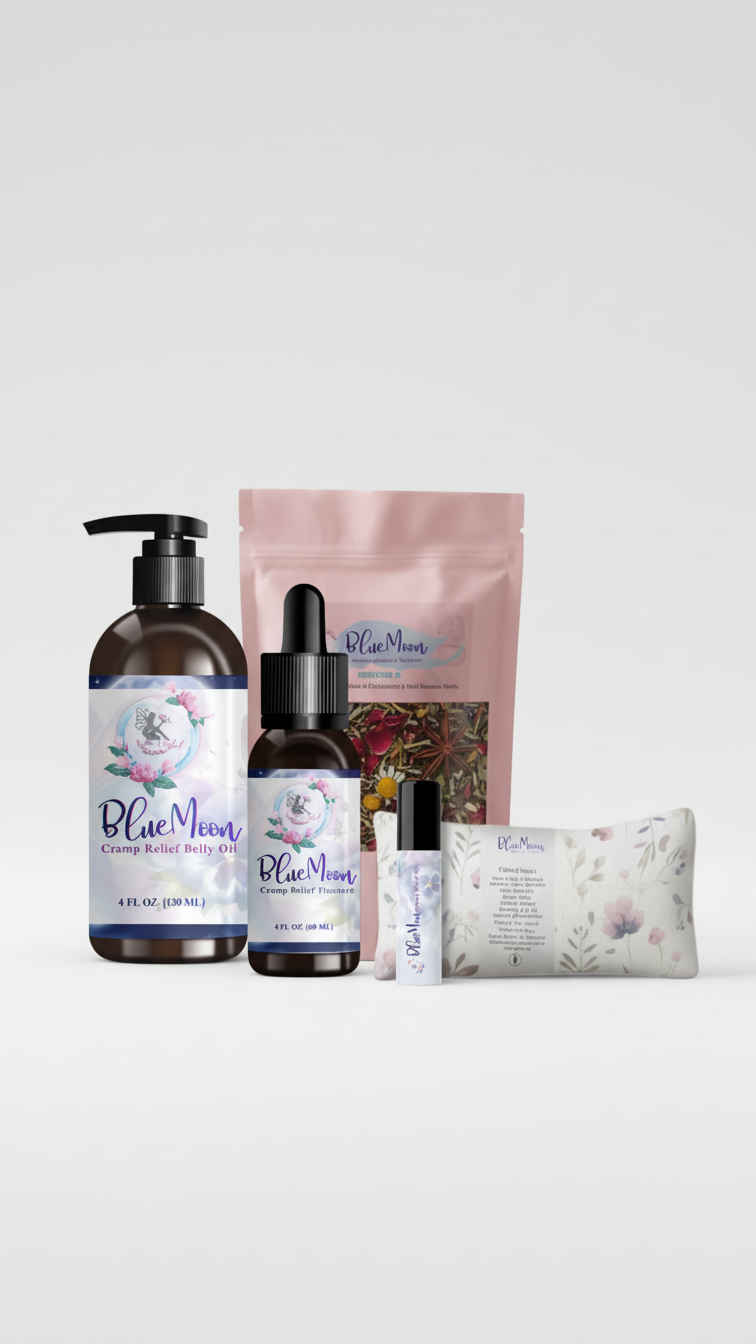
While somatic practices form the foundation of nervous system work, plant medicine has been supporting human regulation for thousands of years. Adaptogenic herbs, nervines, and hormone-balancing botanicals can offer profound support as you rebuild your capacity, particularly during hormonally sensitive seasons like your luteal phase, postpartum, or perimenopause.
Asana Crystal was created with exactly this in mind. The herbal wellness line, developed by Tamie Myers, features intentionally crafted body oils and botanical blends designed to support women through every phase of their cycle and life stage. The Pink Moon Belly Oil brings comfort during menstruation and digestive distress, while the Blue Moon Perimenopause Kit addresses the nervous system disruption that hormonal shifts can trigger. The Velvet Sensual Body Oil supports reconnection with your body and pleasure — a crucial component of nervous system healing that is often overlooked. These are not generic wellness products. They are tools for the kind of embodied self-care that actually moves the needle on regulation.
Pairing herbal support with daily somatic practice creates a powerful feedback loop: the herbs support your biochemistry while the practices rewire your neurology. Together, they accelerate the process of expanding your capacity to hold more — more success, more peace, more of who you are becoming.
Nervous System Regulation and Manifestation
There is a reason the manifestation community is increasingly talking about the nervous system. You cannot call in what your body cannot hold. You can write affirmations, create vision boards, and visualize your dream life until you are blue in the face, but if your nervous system collapses every time you approach a new level of success, visibility, or abundance, you will unconsciously push it away or sabotage it to return to a state that feels familiar.
True manifestation is not about thinking positive thoughts. It is about becoming the woman who can hold the reality she is calling in — in her body, in her nervous system, in her bones. This is the work of somatic capacity. It is the practice of expanding your internal container so that your external reality has permission to match it.
You do not attract what you want. You attract what your nervous system can sustain.
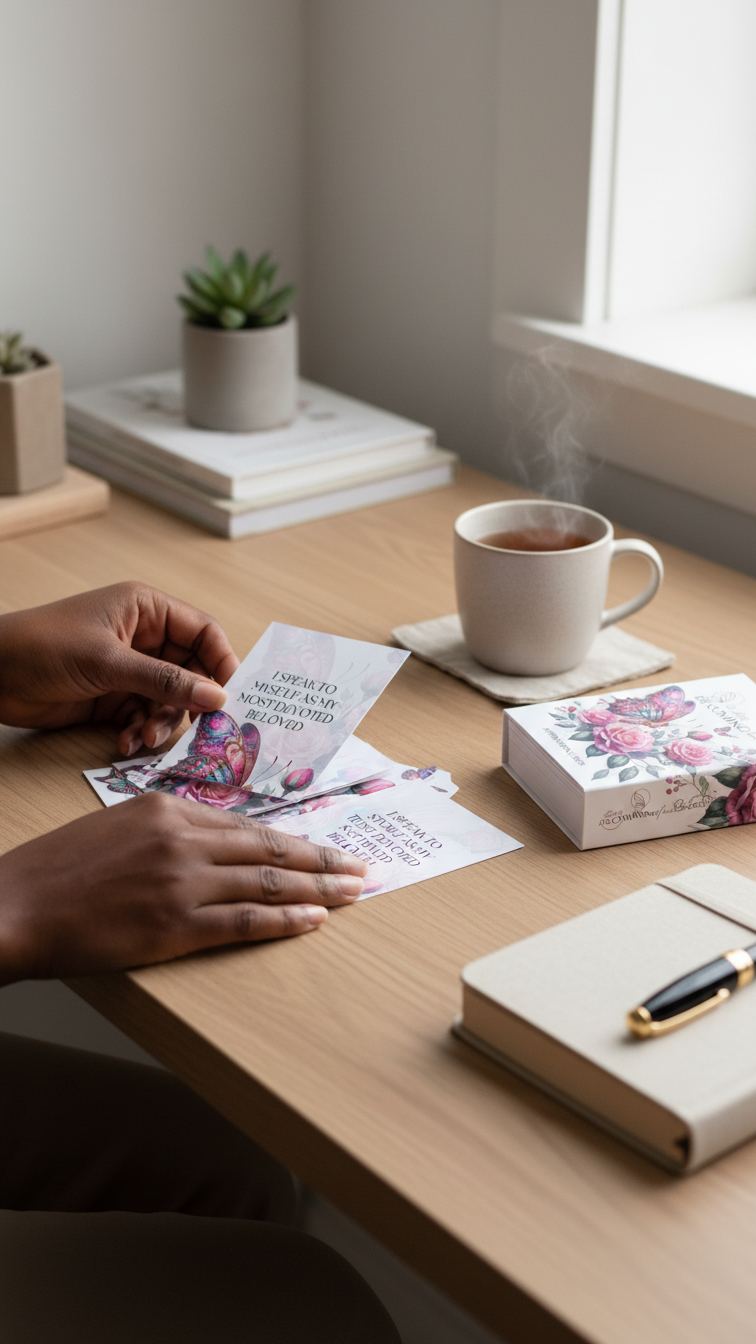
This philosophy is at the heart of The Art of Becoming Her — a live experience created by Tamie Myers that blends nervous system education, somatic practice, and intentional community to help women embody the next version of themselves. It is not another workshop about goal-setting. It is a space where you learn to regulate, expand, and receive. Where you practice holding bigness in your body so that your life can follow.
Join Our Monthly Women's Circle in Glastonbury, CT
If you are in the Hartford County area and craving a space for this kind of embodied, intentional work, the SacredHer Women's Circle meets monthly in Glastonbury, Connecticut. These intimate gatherings bring together women who are committed to nervous system regulation, personal growth, and building a life aligned with their deepest truth.
Each circle includes guided breathwork, somatic practices, reflective journaling, and the kind of co-regulation that only happens when women come together with open hearts and shared intention. Whether you are new to nervous system work or have been on this path for years, the circle meets you where you are. It is not about performance or spiritual bypassing. It is about coming home to your body in the company of women who understand.
Upcoming circles are held at a private venue in Glastonbury, CT. Space is limited to preserve the intimacy of the container. Learn more about our Glastonbury Women's Circle and upcoming dates here.
Your Nervous System Is the Foundation
Every strategy, every launch plan, every revenue goal you set sits on top of your nervous system. It is the infrastructure of your entire life. When that foundation is dysregulated, everything built on top of it feels shaky, exhausting, and unsustainable. When it is regulated and resourced, you operate with a clarity, creativity, and magnetism that no business course can teach.
Nervous system regulation for women entrepreneurs is not a luxury or a trend. It is the missing piece that explains why you can have all the right strategies and still feel like something is fundamentally off. The invitation is simple, though not always easy: start listening to your body. Start treating your nervous system as the asset it is. Start building the somatic capacity to hold everything you are creating.
You deserve a business and a life that feel as good on the inside as they look on the outside. And that begins with regulation.
Join the SacredHer Community
Nervous system regulation resources, somatic practices, and intentional community for women entrepreneurs who are ready to build from the body up.
Connect with Tamie